
Shared Research Labs and Facilities
PBS shared research facilities support studies of the mind, brain, body, and behavior across multiple scales. Departmental resources include neuroimaging, EEG and eye tracking, non-invasive brain stimulation, neuroendocrine sampling, virtual reality, psychophysiology, and controlled behavioral testing spaces. These facilities provide the experimental infrastructure for faculty, students, and collaborators to conduct state-of-the-art psychological and brain sciences research.
Brain Imaging Center
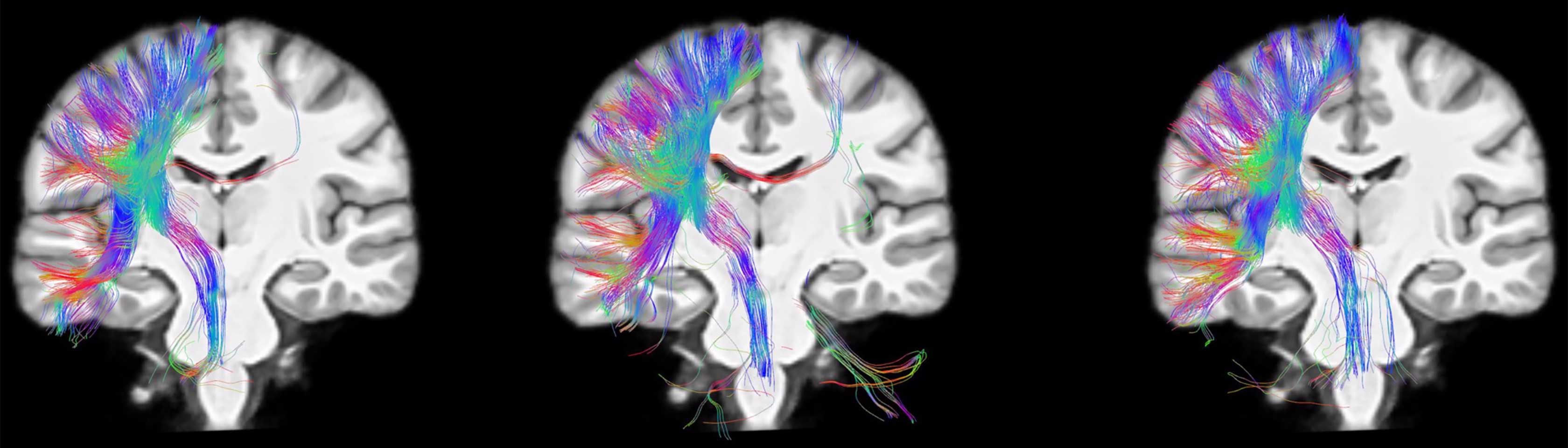
| Location: | Psych East 0804 |
| Phone: | (805) 893-5235 |
| Director: | René Weber |
| Full page: | https://bic.ucsb.edu/ |
The UCSB Brain Imaging Center supports human neuroimaging research on the structure, function, and dynamics of the brain. The center houses a 3-Tesla Siemens PRISMA MRI system with a 64-channel head coil and MRI-compatible high-density EEG hardware, enabling studies that combine brain imaging, behavior, and cognitive neuroscience. It is a core resource for research and graduate training in attention, memory, motor control, spatial navigation, social cognition, and related areas.
EEG and Visual Psychophysics Laboratory
| Location: | Psych 2320A/B (2 highly similar setups) |
| Director: | Thomas Sprague |
| Gear: |
|
The EEG and Visual Psychophysics Laboratory provides shared infrastructure for studying human brain activity and visually guided behavior with high temporal precision. The lab supports EEG, EyeLink eye tracking, temporally-precise stimulus presentation, chin-rest stabilized psychophysics, and behavioral response collection, allowing researchers to measure how neural activity, eye movements, perception, and decisions unfold in real time. This facility supports a broad range of work in cognitive neuroscience, vision science, attention, learning, and neurotechnology.
Neurostimulation Laboratory
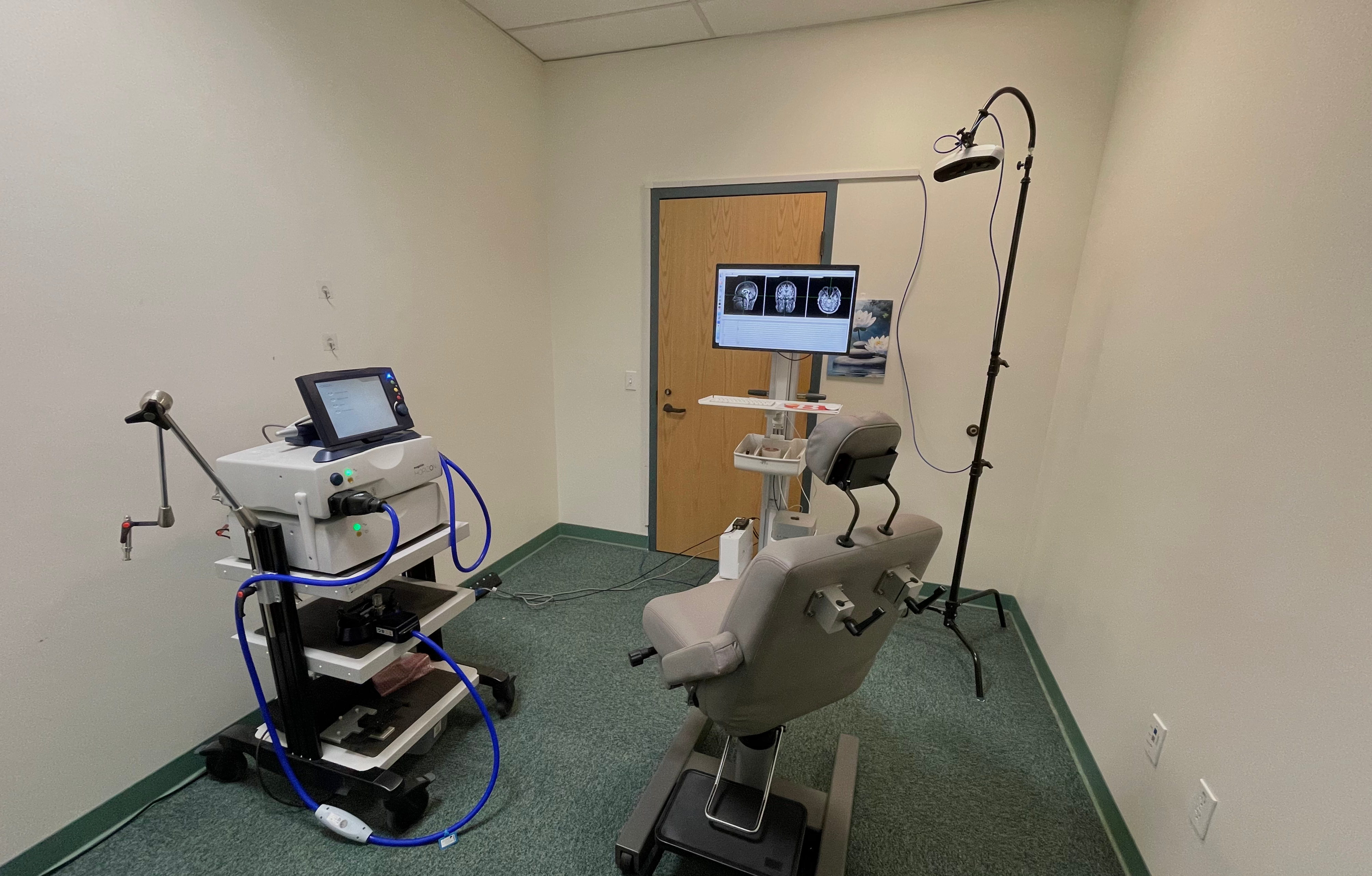
| Location: | Psych East 0816 |
| Director: | Regina Lapate |
| Gear: |
|
The Neurostimulation Laboratory provides shared infrastructure for studying causal links between brain activity and behavior through non-invasive brain stimulation. The lab supports transcranial magnetic stimulation (TMS) with a MagStim TMS system, BrainSight Neuronavigation for TMS targeting, and multiple coil configurations, enabling researchers to modulate cortical activity with spatial precision. Its proximity to the UCSB Brain Imaging Center enables studies that combine TMS with neuroimaging approaches, including TMS-fMRI, while coordination with the EEG and Visual Psychophysics Laboratory supports emerging TMS-EEG capabilities. This facility supports a broad range of work in cognitive neuroscience, motor control, perception, attention, learning, and translational neurotechnology.
Neuroendocrinology Laboratory
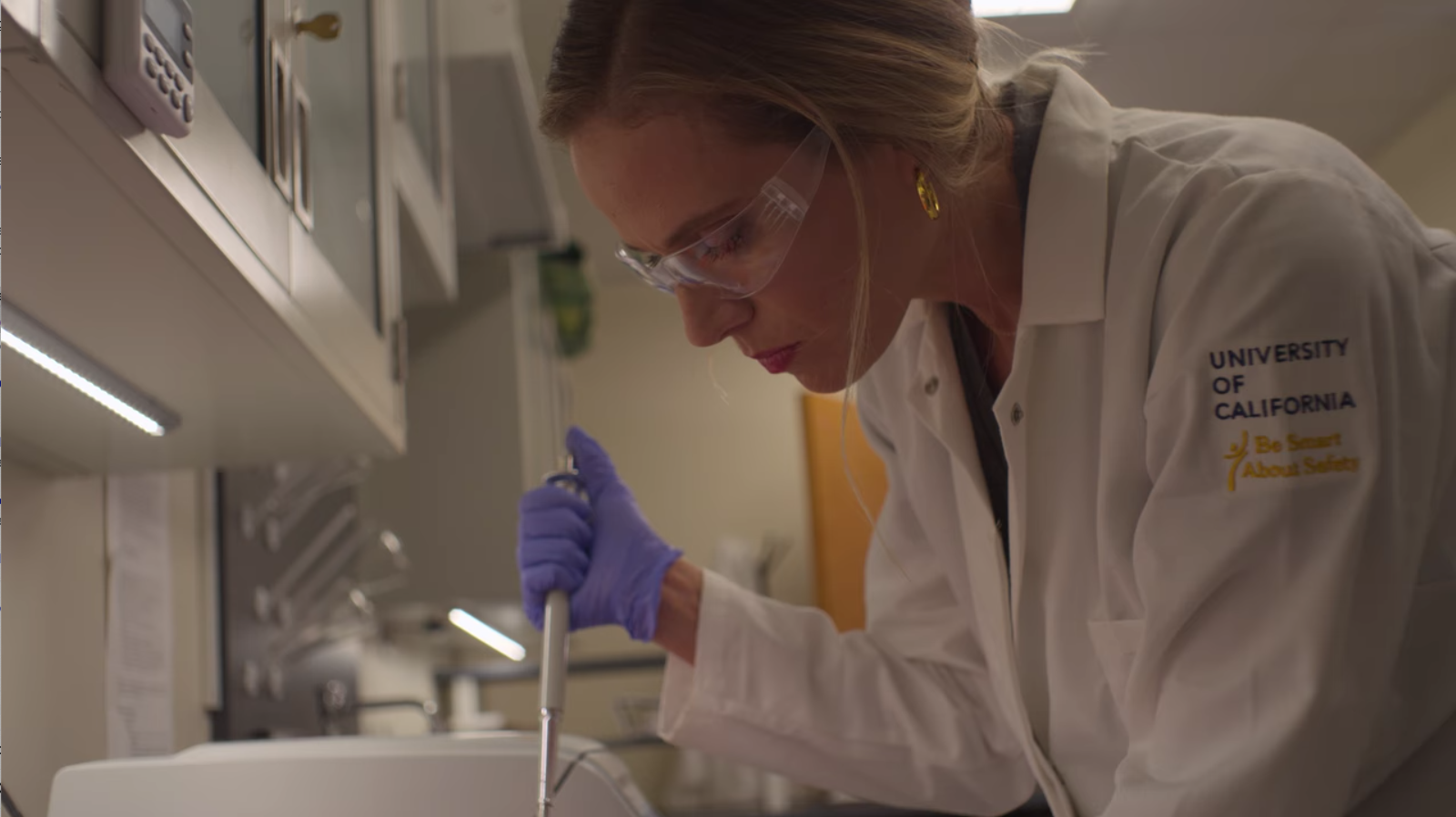
| Location: | Psych 3513 |
| Director: | Emily Jacobs |
| Gear: |
|
The Neuroendocrinology Laboratory enables researchers to connect the body’s peripheral signals with brain function, cognition, emotion, and behavior. The lab supports biofluid sampling, specimen storage, and assay-based approaches (e.g., endocrinology, proteomics) that can be combined with behavioral testing, neuroimaging, and computational modeling, making it possible to study how hormonal state and hormonal transitions shape the human brain across time. This facility supports research in cognitive neuroscience, affective science, learning and memory, aging, reproductive health, and women’s brain health.
Research Center for Virtual Environments and Behavior
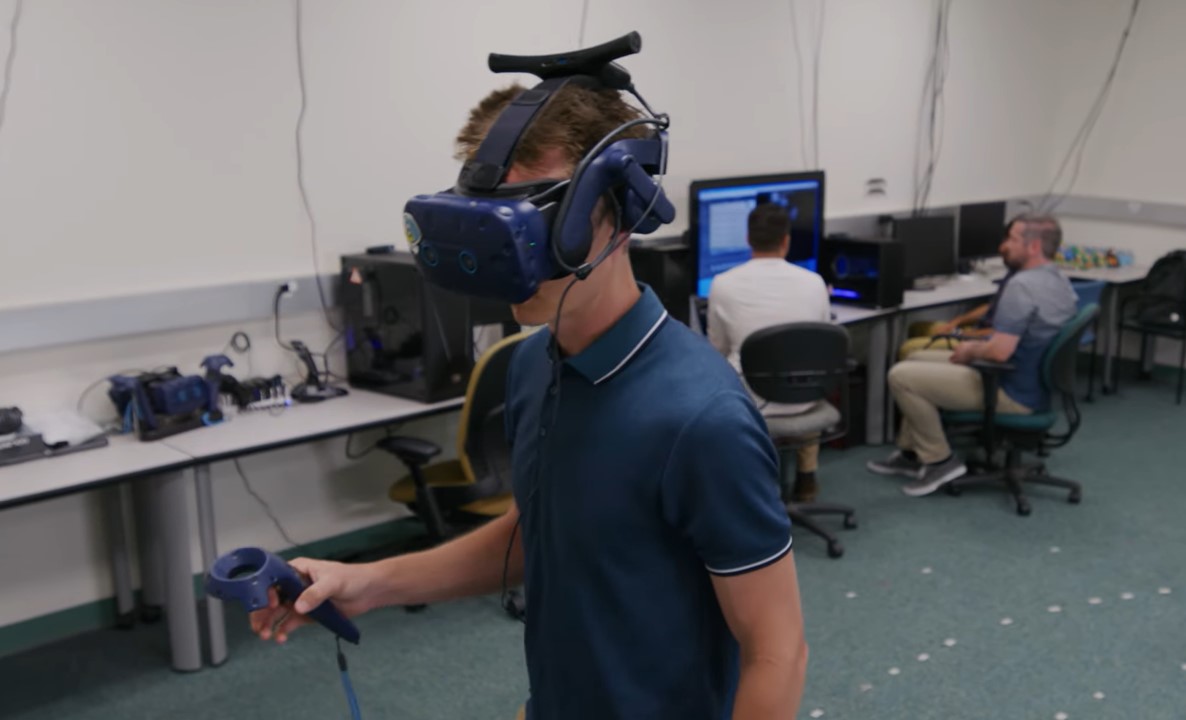
| Location: | Psych East 0818 |
| Director: | Michael Beyeler |
| Gear: |
|
| Full page: | https://recveb.ucsb.edu/ |
The Research Center for Virtual Environments and Behavior supports studies of perception, navigation, spatial cognition, embodied behavior, and interaction in immersive virtual environments. The facility combines an 8 × 8 m tracking space with VR headsets, eye tracking, physiological recording, and locomotion technologies, enabling researchers to study how people move, perceive, decide, and act in realistic but experimentally controlled settings. ReCVEB serves as a shared platform for behavioral research, virtual reality studies, demonstrations, and interdisciplinary collaborations across PBS and the broader campus.
First Floor Behavioral Testing Laboratory
| Location: | Psych 1306 |
| Director: | Tamsin German |
The First Floor Behavioral Testing Laboratory provides flexible shared space for controlled human-subjects research. The lab supports behavioral experiments, participant testing, small-group data collection, and study protocols that do not require specialized imaging, stimulation, or virtual-reality equipment. It is part of the department’s core infrastructure for behavioral research and undergraduate and graduate research training.
Basement Behavioral Testing Laboratory
| Location: | Psych East 0820 |
| Director: | Barry Giesbrecht |
The Basement Behavioral Testing Laboratory provides shared space for behavioral experiments requiring controlled participant testing across multiple stations or sessions. The lab supports high-volume data collection for studies of cognition, attention, perception, memory, and behavior, with scheduling coordinated across participating research groups. It is a core departmental resource for sustained human-subjects testing outside specialized imaging, stimulation, or virtual-reality environments.
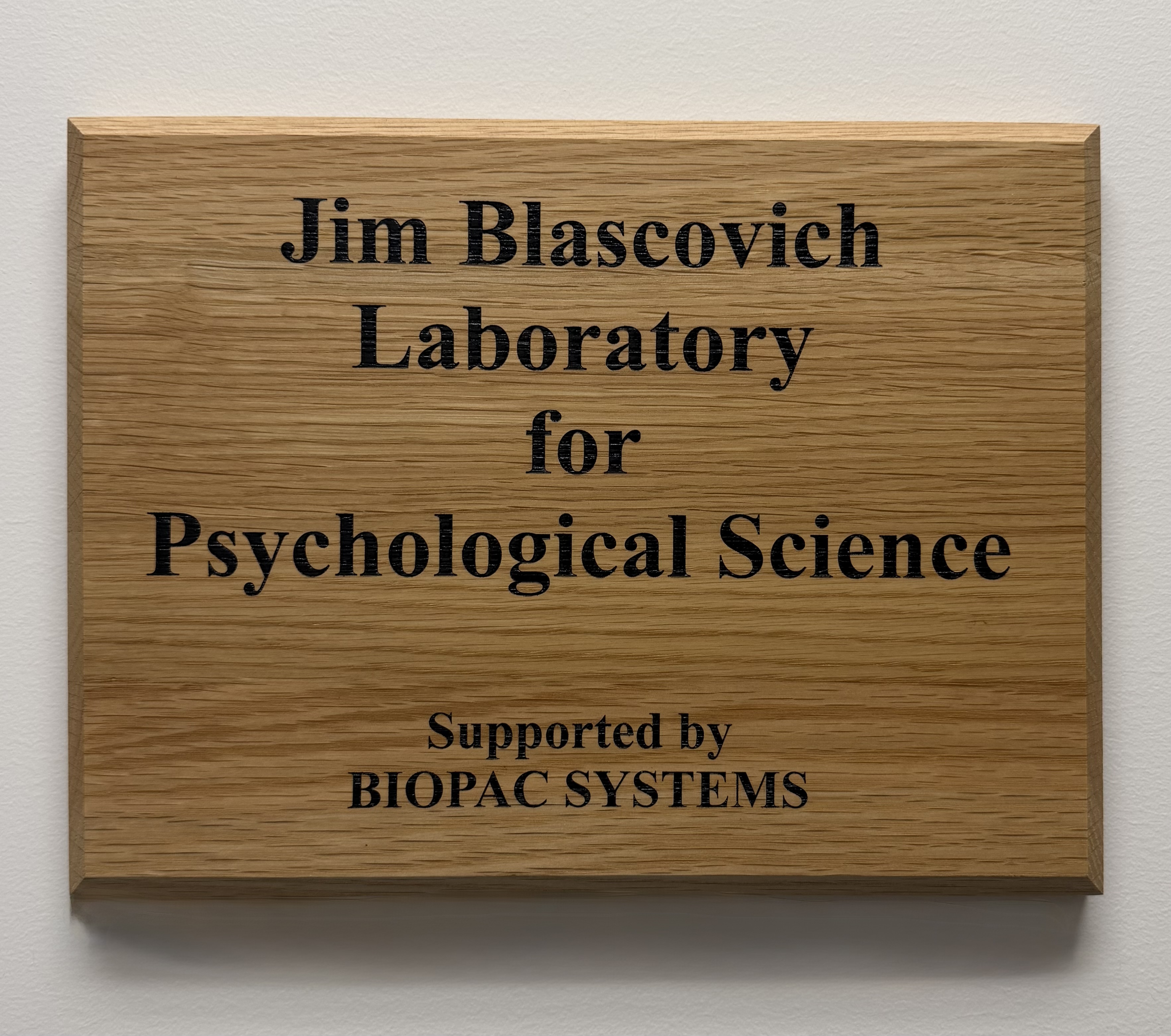
Jim Blascovich Lab for Psychological Science
| Location: | Psych East 2800 |
| Director: | David Sherman |
The Jim Blascovich Lab for Psychological Science / BioPac supports teaching and research involving behavioral measurement and peripheral physiological recording. The space includes 8 BioPac systems used in laboratory courses and available research contexts, enabling students and researchers to connect psychological processes with measurable physiological signals. The lab serves as both an instructional resource and a flexible platform for behavioral and psychophysiological studies.
Teaching Faculty Research and Training Laboratory
| Location: | Psych East 2824 |
| Director: | Vanessa Woods |
The Teaching Faculty Research and Training Laboratory supports undergraduate research training, instructional coordination, lab meetings, and student-facing research activities. The space provides shared infrastructure for teaching-focused faculty and undergraduate learning assistants, helping connect classroom instruction with hands-on research practice. It is a flexible departmental resource for peer to peer mentoring, research preparation, and teaching-related scholarly activity.
